While completing his education through Switzerland’s apprenticeship system, Manuel Wagner built a faster and more consistent way to test hardware used in Loft Dynamics’ flight simulators.
In Switzerland, an apprentice is both a student and an employee. Students divide their education between school, technical training and paid work at a company, earning a nationally recognized qualification while gaining several years of practical experience.
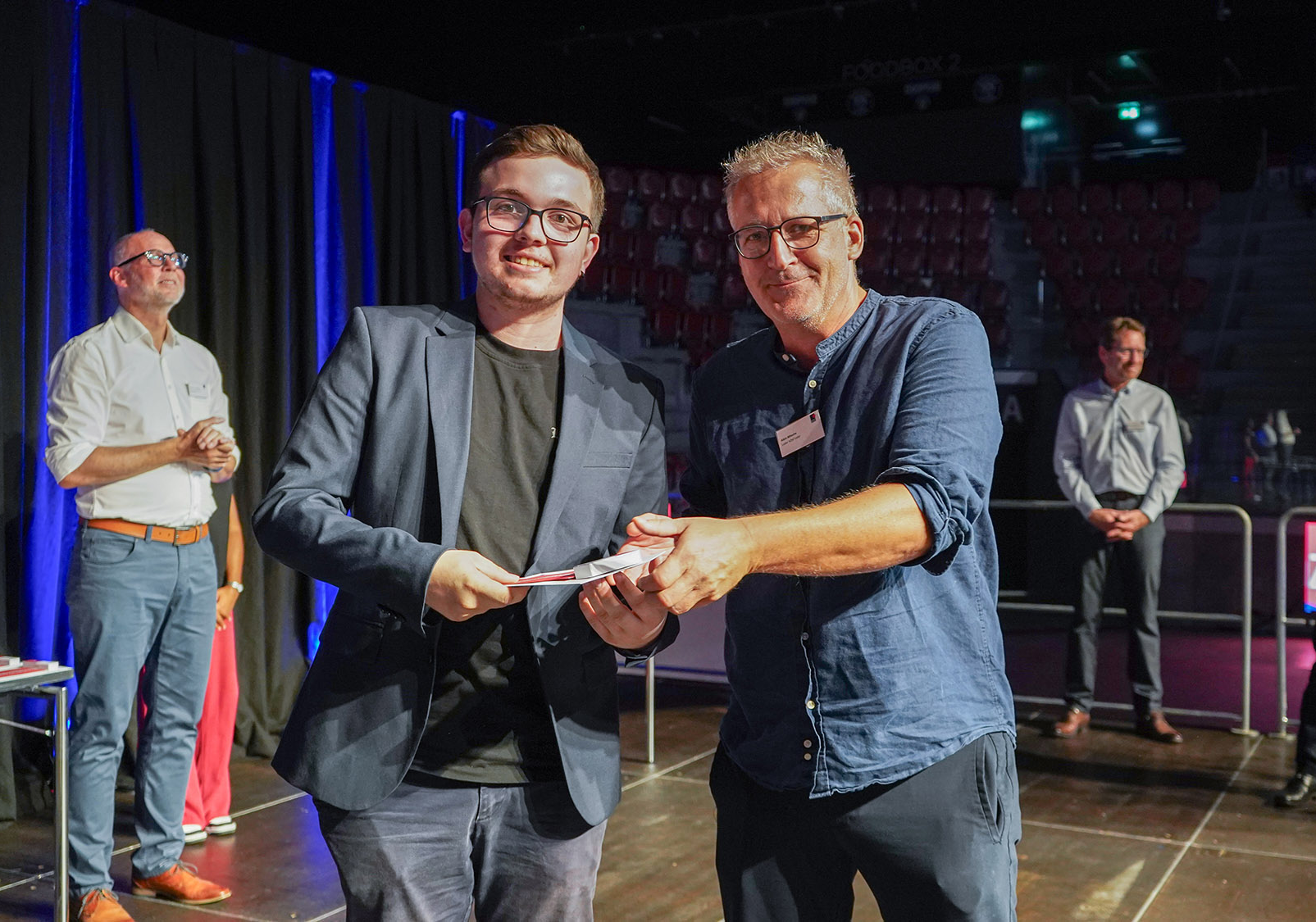
Manuel Wagner, age 21, completed his vocational education while working at Loft Dynamics. For his final project, he took on a challenge that mattered to our hardware production team: as we build more flight simulators, the processes used to assemble and test each component also need to keep pace.
Manuel focused on the printed circuit boards, or PCBs, used inside our simulator hardware. These boards connect the simulator’s physical controls with the electronic logic systems that interpret a pilot’s inputs. Before a board can move through production, we need to confirm that its connections and control interfaces work correctly.
Until now, much of that testing was done manually. A technician connected and checked each control element individually, following a series of steps through a laptop application. Testing one board took approximately 30 minutes and required close attention throughout the process.
As hardware production increases, a manual process like this can become a bottleneck. It also becomes more important to test every board using the same sequence and record the results consistently.
From a manual check to a repeatable system
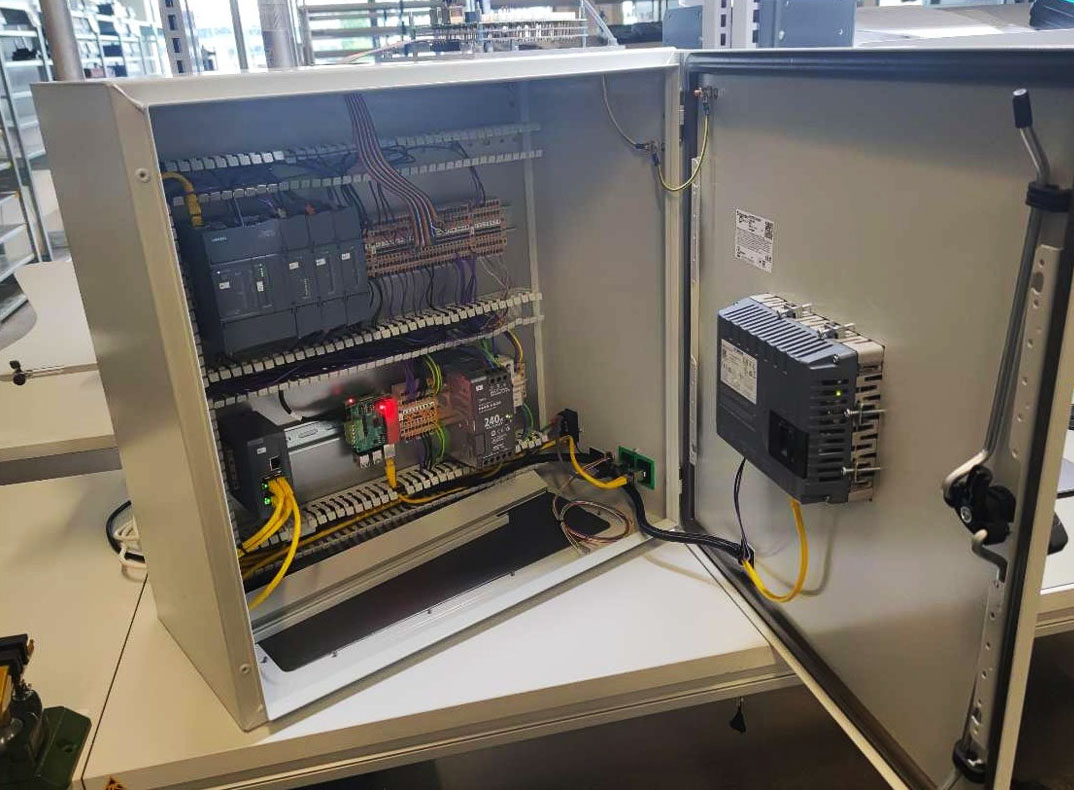
Manuel designed and built a test system that guides each board through a defined sequence, checks the required connections, records the results and generates a test report.
During project testing, the system reduced testing time from approximately 30 minutes to five minutes per board. Across over a dozen boards per month, that could save multiple hours of production time while giving our team a more repeatable testing process.
The improvement extends beyond speed. The system follows the same sequence each time, making the process more consistent and easier to document. It also reduces the chance that a step could be missed or completed in a different order.
The project is now in its final development stage. Manuel is working with our software engineering team to complete the final software integration and prepare the system for regular use in hardware production.
Before it enters production, the system will complete an internal production review.
Once introduced, we expect it to provide a simple, automated testing procedure for most of our circuit boards, significantly reducing the production resources required.
Taking ownership of a real production challenge
Manuel worked across mechanical design, electronics and software to build the system. He designed the test fixture, developed the electrical schematics and wrote the software that manages the testing sequence and communication between the system’s components.
He led the project with support from colleagues in production, software engineering and electrical engineering. The leadership team reviewed his work, challenged his approach and provided technical guidance as the project developed.
“Manuel identified the opportunity to automate this process and came to us with a convincing technical concept. He took ownership, brought in the right expertise and worked effectively across teams.
The result has real potential to improve how we test hardware as production grows.”
— Michael Albrecht, Production Specialist and Manuel’s supervisor
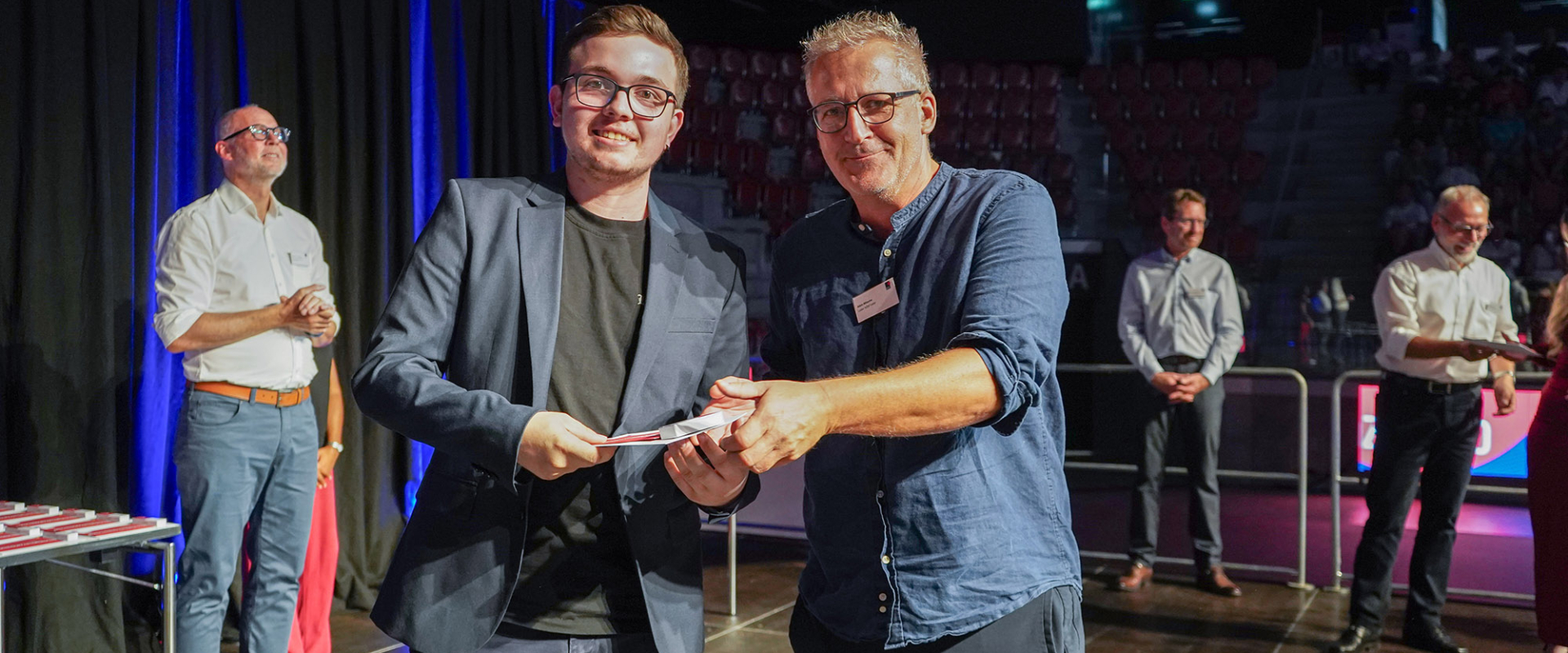
Manuel completed the system as part of his Individual Practical Work (IPA), the final practical assessment in his vocational education program. Internal and external experts reviewed and evaluated the project through Switzerland’s official apprenticeship qualification process.
Why the apprenticeship model fits our work
Switzerland’s apprenticeship system gives students the opportunity to contribute to real work while learning from experienced colleagues. At Loft, that means students do more than observe. They help solve current technical problems and learn how different parts of a complex product work together.
We formalized our apprenticeship partnership with Ausbildungszentrum Winterthur (AZW) in 2024. The program gives apprentices hands-on experience across hardware, software, programming and systems integration. With three locations, around 900 apprentices across 14 vocational fields and approximately 100 partner companies, AZW is an established centre for technical vocational education and training in German-speaking Switzerland.
Manuel completed the first year of his vocational training at AZW Uster, where he gained the educational foundations of his profession. He then joined Loft to complete the practical part of his apprenticeship in the company’s professional working environment.
This model is well suited to the work we do. Building flight simulators requires people who can understand how physical controls, electronics, software and aviation systems interact.
Students gain experience across those disciplines while contributing to real technical work. At the same time, we can develop and retain people who understand our products, processes and standards from early in their careers.
Manuel’s project shows what that can produce. While still completing his education, he addressed an existing production constraint, built a working system and collaborated with several teams to prepare it for future use.
Continuing at Loft Dynamics
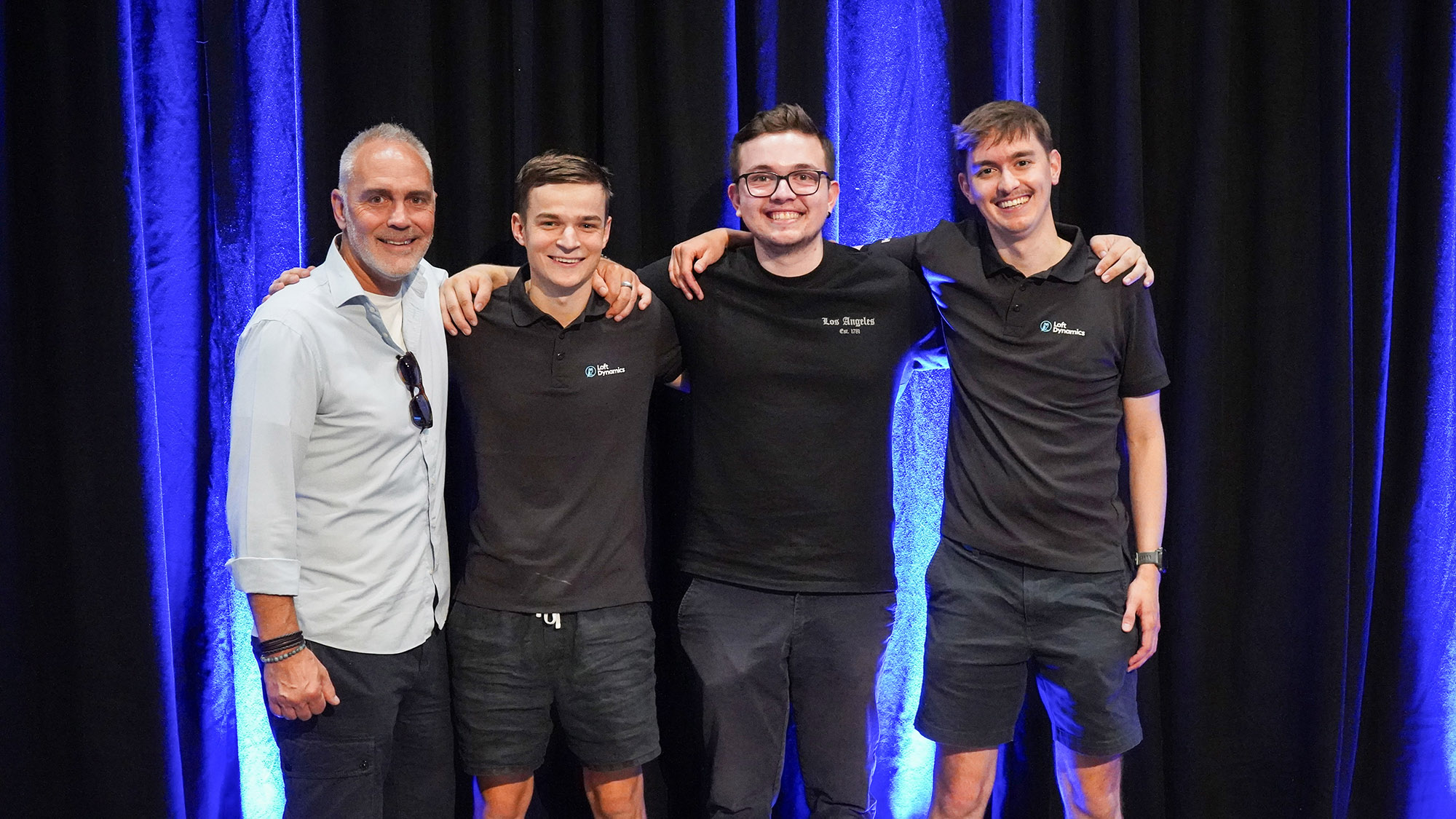
Following the completion of his vocational education, Manuel will continue at Loft Dynamics as Production Specialist on the production team.
He will continue to maintain the test system as it completes its final development and moves toward production use.
Manuel’s decision to stay gives this story a natural next chapter. The apprenticeship allowed him to build practical experience, contribute to work that mattered and grow into a role with greater responsibility. He will now continue that work as part of Loft’s production team.
Before completing his vocational education, Manuel had already taken a technical project from an initial idea to a working system with the potential to improve how we test simulator hardware.
His apprenticeship may be complete, but the work he started will continue.
Congratulations, Manuel!
About Loft Dynamics
Loft Dynamics AG is the global leader in virtual reality (VR) flight training, and the first company with VR simulators qualified by both the FAA and EASA. Trusted by Alaska Airlines, Airbus Helicopters, the Los Angeles Police Department, and more, we serve the full aviation ecosystem—spanning commercial airlines, eVTOLs, and diverse helicopter operators, as well as schools, OEMs, governments, and regulators. Our mission is to make high-quality, immersive pilot training more accessible, affordable and scalable than ever before. We produce full-motion VR simulators that are ten times smaller and significantly more cost-effective than legacy simulators. We also provide a connected suite of solutions that integrate our simulators worldwide, including at-home training kits, virtual instruction from the world’s top pilots and AI-driven, data-rich training intelligence. Loft Dynamics is leading a global paradigm shift in pilot training and powering the next generation of highly skilled pilots. Learn more at LoftDynamics.com.
Media Contact info@loftdynamics.com