The first-of-its-kind simulator gives Norway’s largest domestic helicopter operator a new way to train for demanding missions and emergencies while bringing aircraft-specific training closer to its pilots.
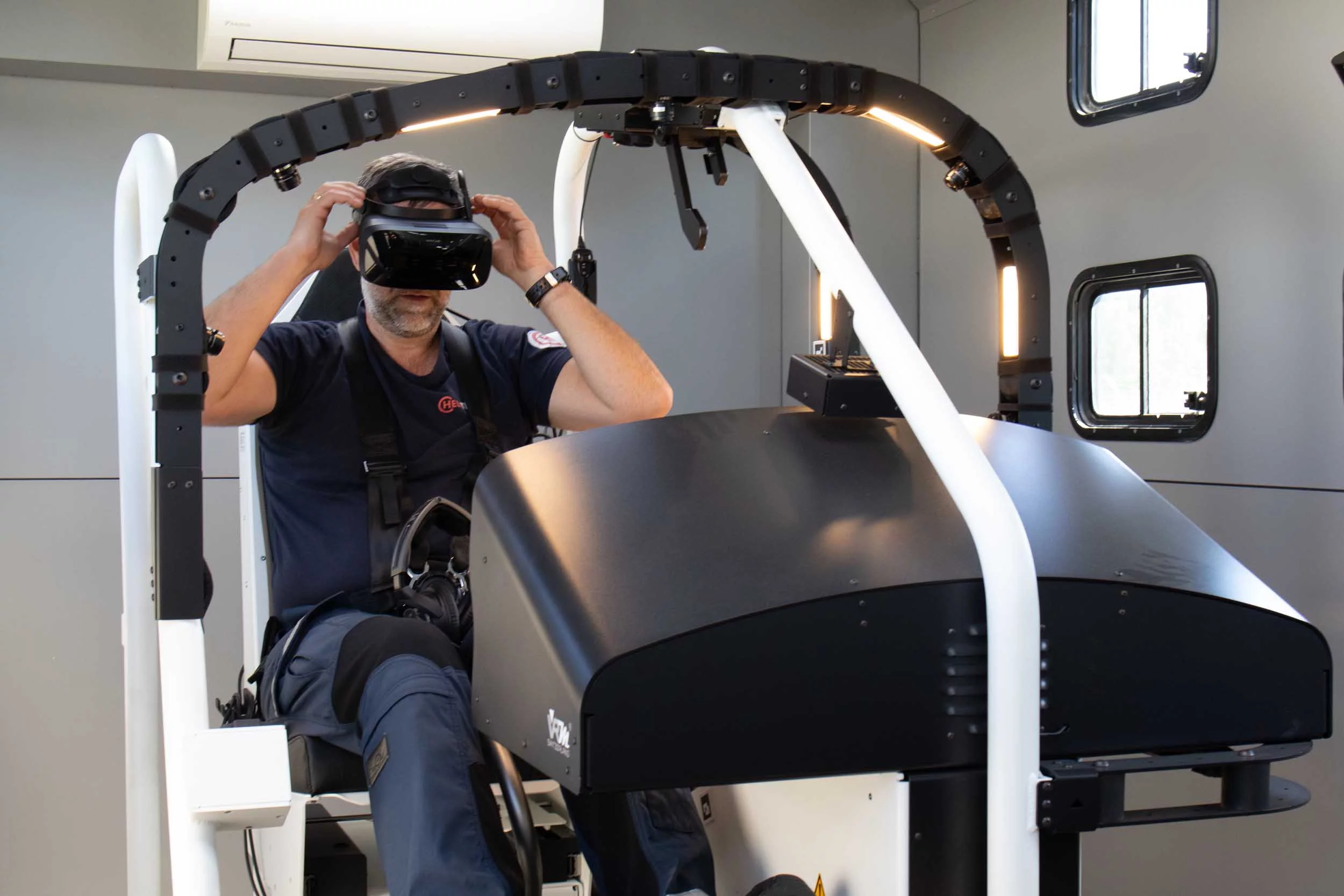
The first-of-its-kind simulator gives Norway’s largest domestic helicopter operator a new way to train for demanding missions and emergencies while bringing aircraft-specific training closer to its pilots.
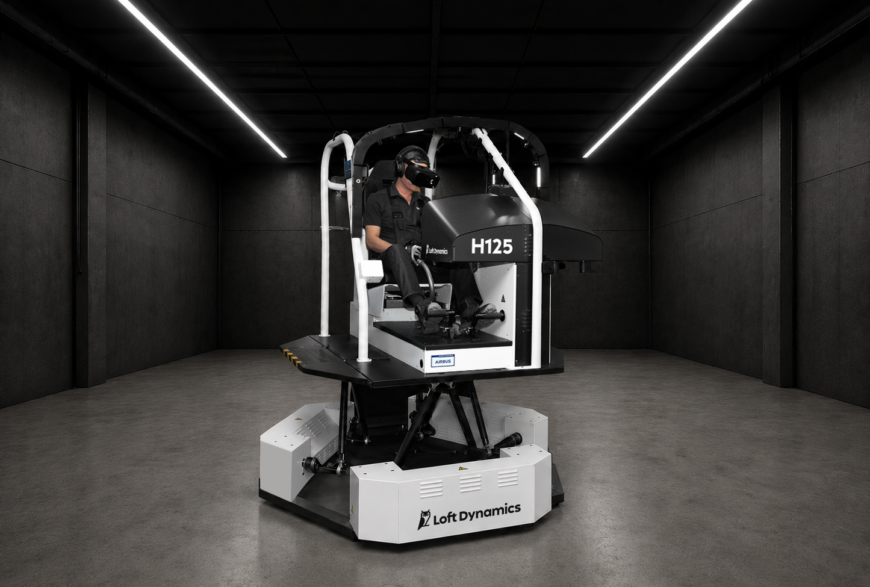
Helitrans is now operating the world’s first Airbus H125 virtual reality flight training device qualified as an EASA FTD Level 3.
The qualification marks a significant step for helicopter training. The device can be used for H125 pilot training and checking with regulatory training credits, allowing pilots to complete more training in a simulator rather than in the aircraft.
The milestone follows an extended collaboration between Helitrans and Loft Dynamics, formerly VRM Switzerland, to develop the simulator around the needs of professional H125 operators and qualify it for training.
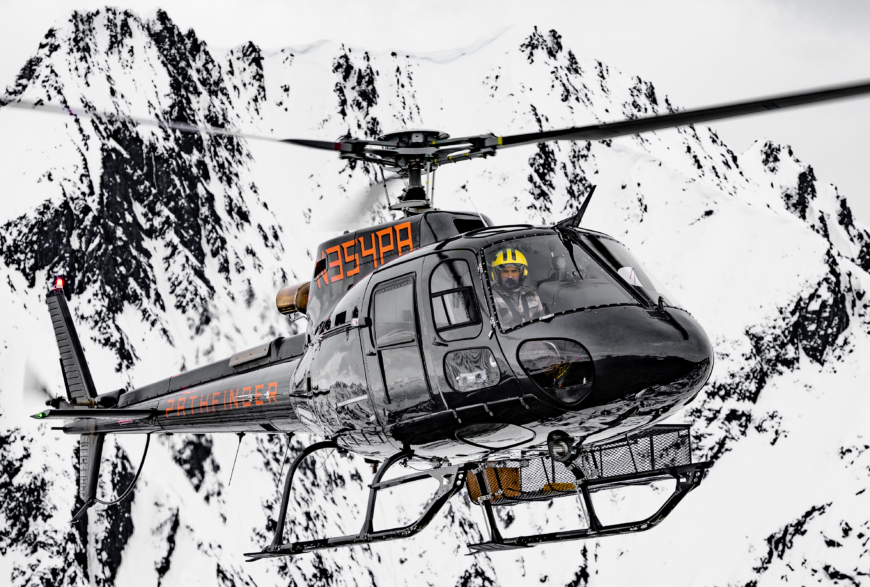
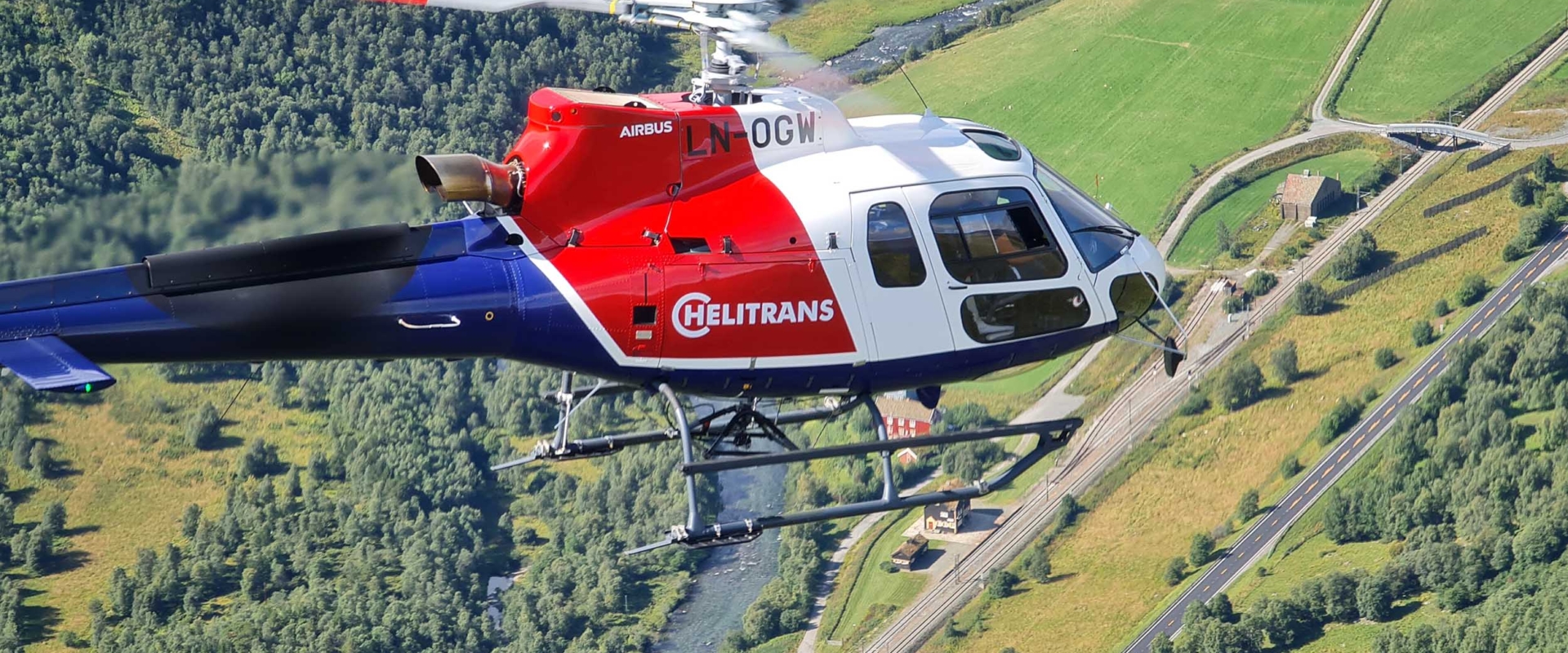
For Helitrans, the technology addresses a practical problem. The H125 is central to the company’s operations, which include demanding utility and external-load missions such as work on masts, pylons and power lines. Many failures and high-risk situations pilots need to prepare for are difficult or unsafe to practice in an actual helicopter.
“The entire Helitrans team, Norway’s largest domestic helicopter operator, is proud to be the first company in the world to operate an approved VR-based Airbus H125 FTD Level 3 simulator. The approval from EASA and Luftfartstilsynet (the Norwegian Civil Aviation Authority, the inspectorate responsible for civil aviation in Norway) warrants our decision to invest in this new technology, which will be crucial to increasing the level of safety and, not least, bringing the helicopter industry’s training level into closer alignment with heavy aviation through the use of a simulator,” says Helitrans CEO Ole Christian Melhus.
Melhus came to Helitrans with experience in the airline industry, where structured simulator training has long played a central role in pilot training. He sees an opportunity to bring more of that model to helicopter operations, where pilots have historically completed much of their training and checking in the aircraft itself.
“I am extremely excited to be part of a paradigm shift and the innovative and sophisticated training concept launched by Loft Dynamics, using high-resolution 3D graphics combined with realistic motion simulation. This makes it possible for us and other helicopter operators to build a rigorous training and safety culture and, not least, reduce incident and accident rates in the industry,” Melhus adds.
For Loft Dynamics, the H125 qualification demonstrates that VR can move beyond supplemental practice and become part of a regulator-qualified professional flight training system.
“For Loft Dynamics, it is unique to help flight schools and helicopter operators train and perform qualifications on a VR-based helicopter simulator. Our technology offers pilots the realistic sensations of being in a real helicopter. Procedures and emergency procedures can be trained realistically and without risk, even in situations that cannot be trained in a real helicopter,” says Fabi Riesen, CEO of Loft Dynamics.
Training for missions that are difficult to rehearse in an aircraft
Helitrans pilots perform demanding utility missions, including installing masts, pylons and power lines and conducting sling-load operations. These jobs require precise aircraft handling and extensive preparation.
They also pose a training challenge. Some of the situations pilots most need to prepare for are costly, difficult or too dangerous to reproduce in an actual helicopter.
“In the past, we have rented conventional helicopter simulators abroad at high hourly rates. In addition to the costs, these simulators are very limited in relation to our needs,” says Melhus.
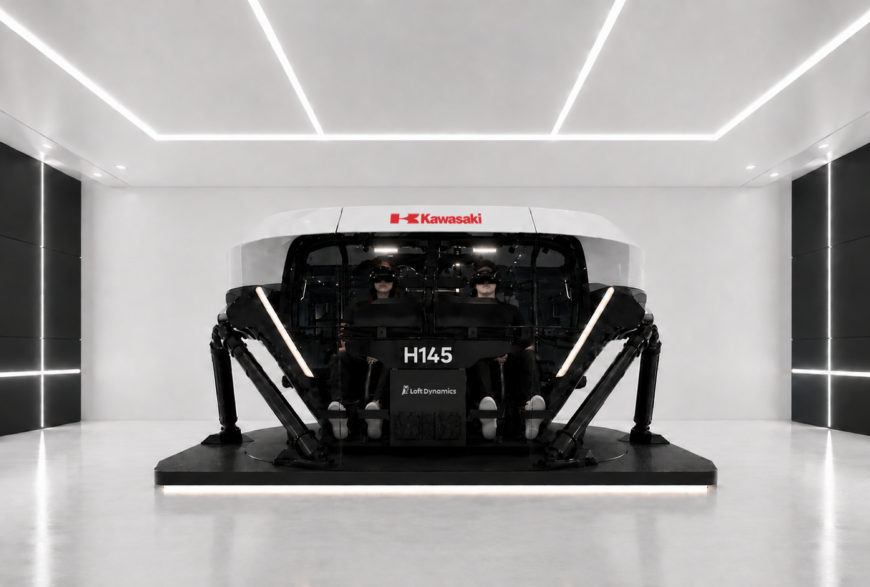
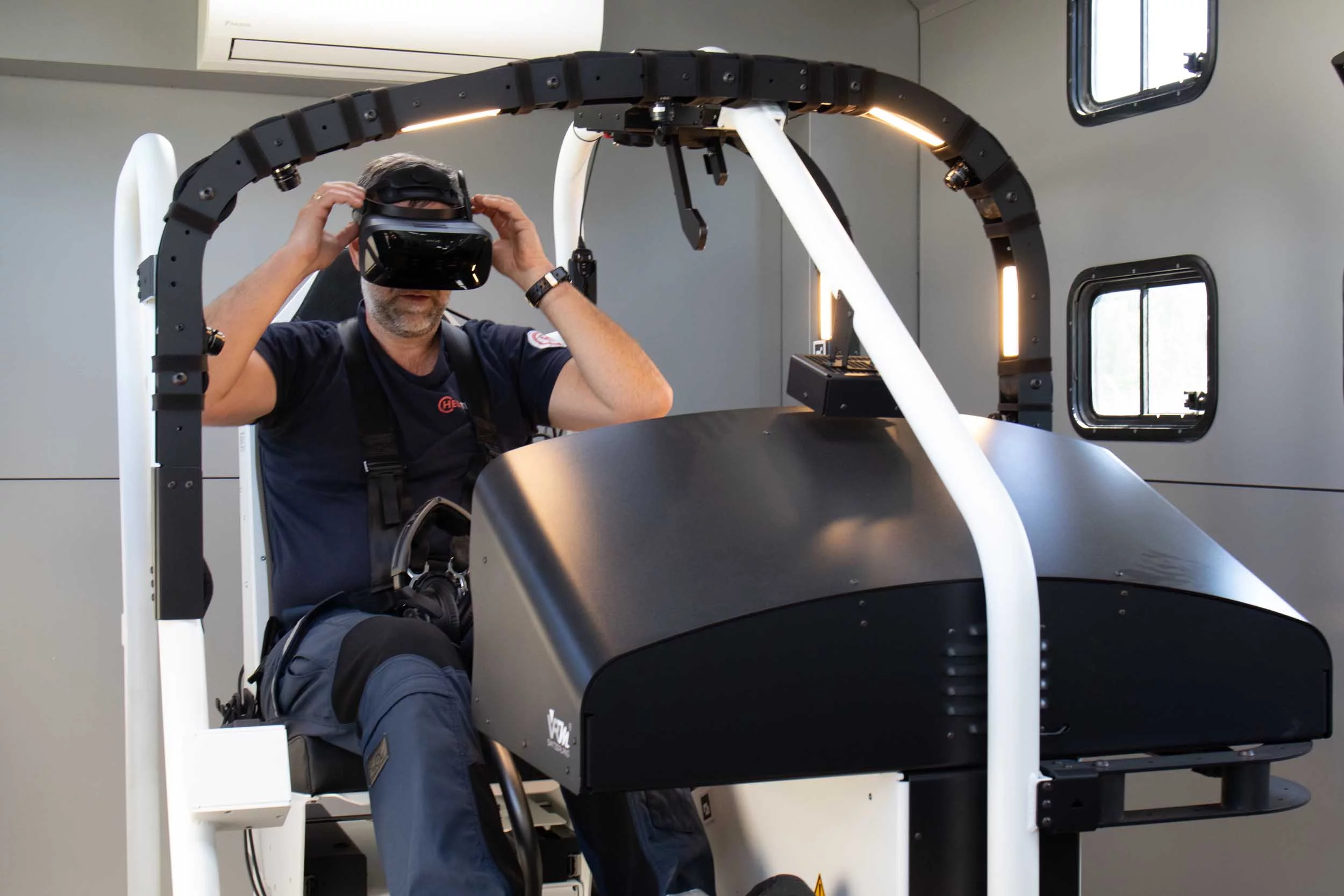
The Loft Dynamics system takes a different approach from conventional full-flight simulators. A VR headset provides the pilot’s view of the cockpit, instruments and external environment. Tracking technology allows pilots to see their hands and interact with the physical controls. The cockpit sits on an electrically driven motion platform that reproduces the movements and physical cues of the helicopter.
Together, those systems give pilots an aircraft-specific environment in which to practice normal operations, emergencies and situations that would carry unnecessary risk in flight.
“What this modern technology has achieved on that front is just absolutely fantastic,” says Melhus. “The realism of the new simulator surpasses traditional simulators by a long way, and we have also seen great interest in the technology from the Norwegian authorities, who have had many representatives visit to test the simulator and experience how it works.”
For Helitrans, aircraft realism is only part of the value. The company also needs training that reflects the missions its pilots actually perform.
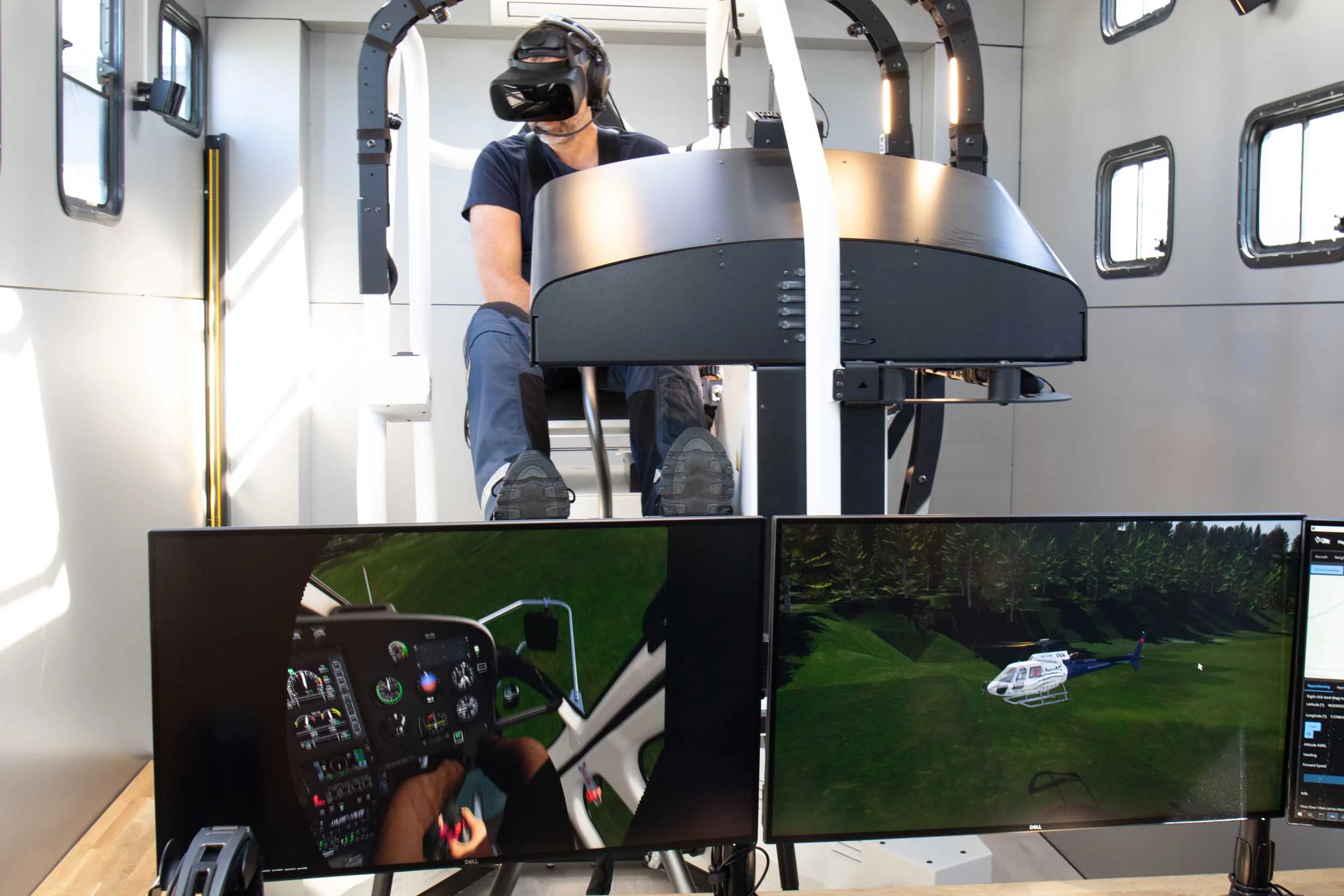
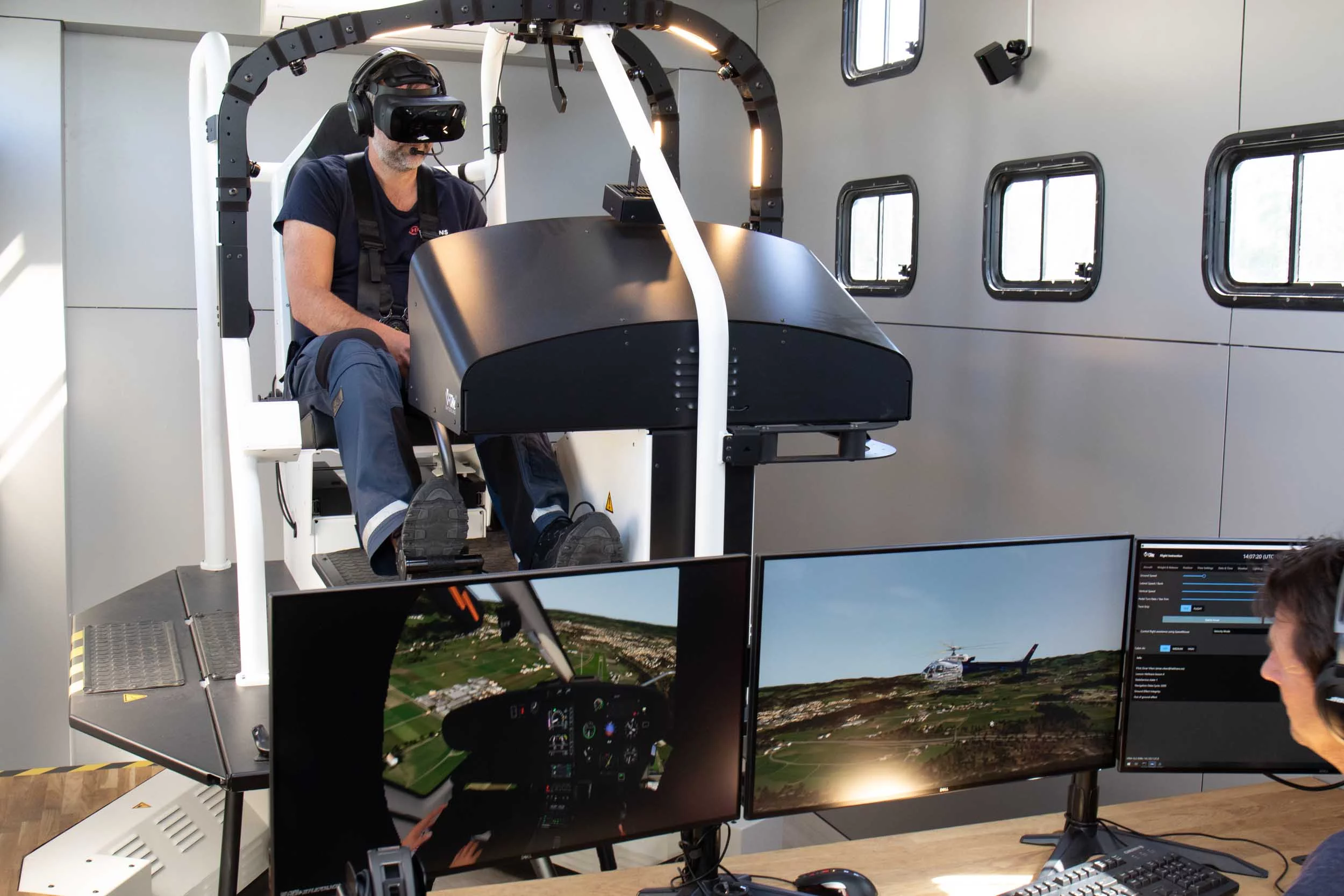
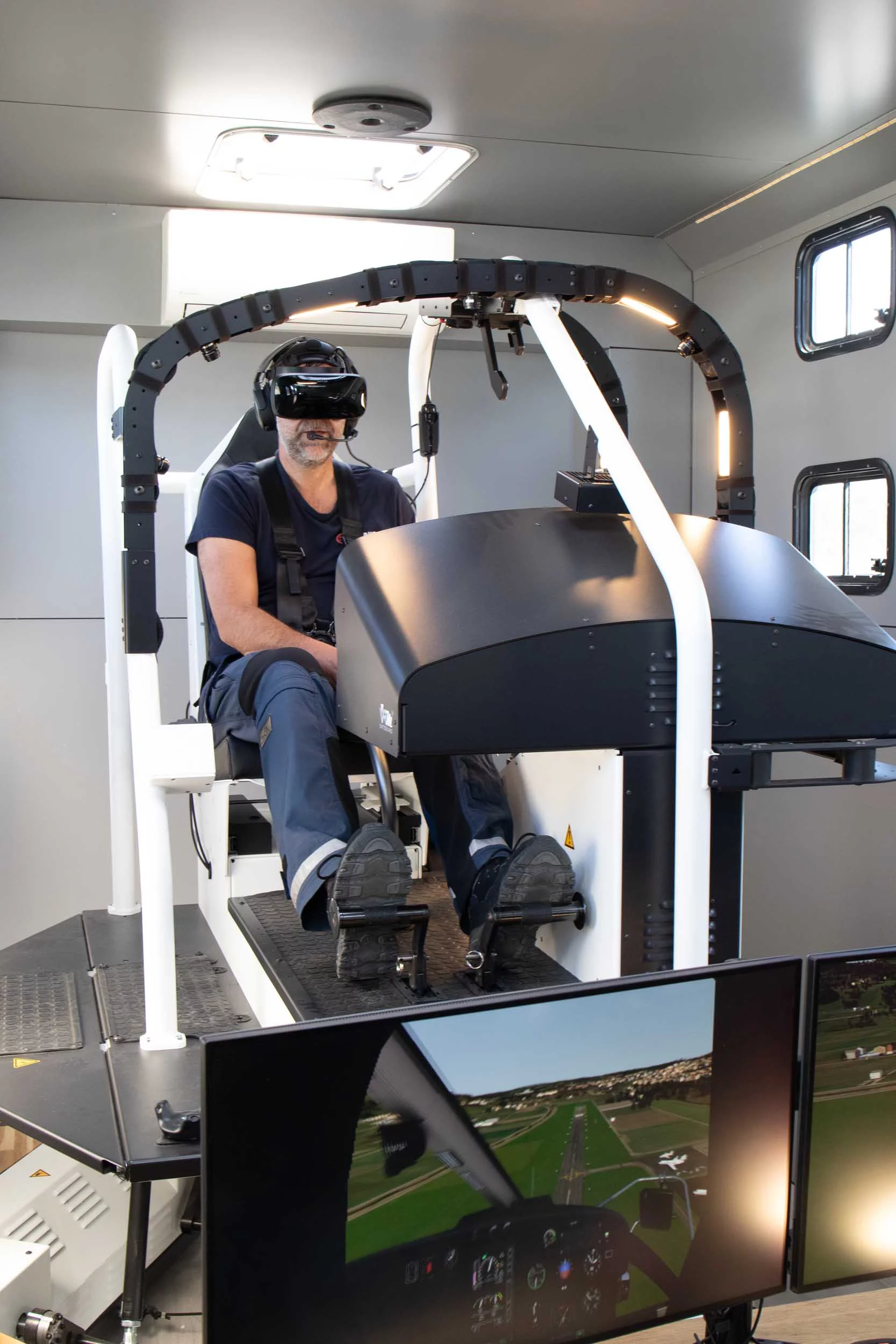
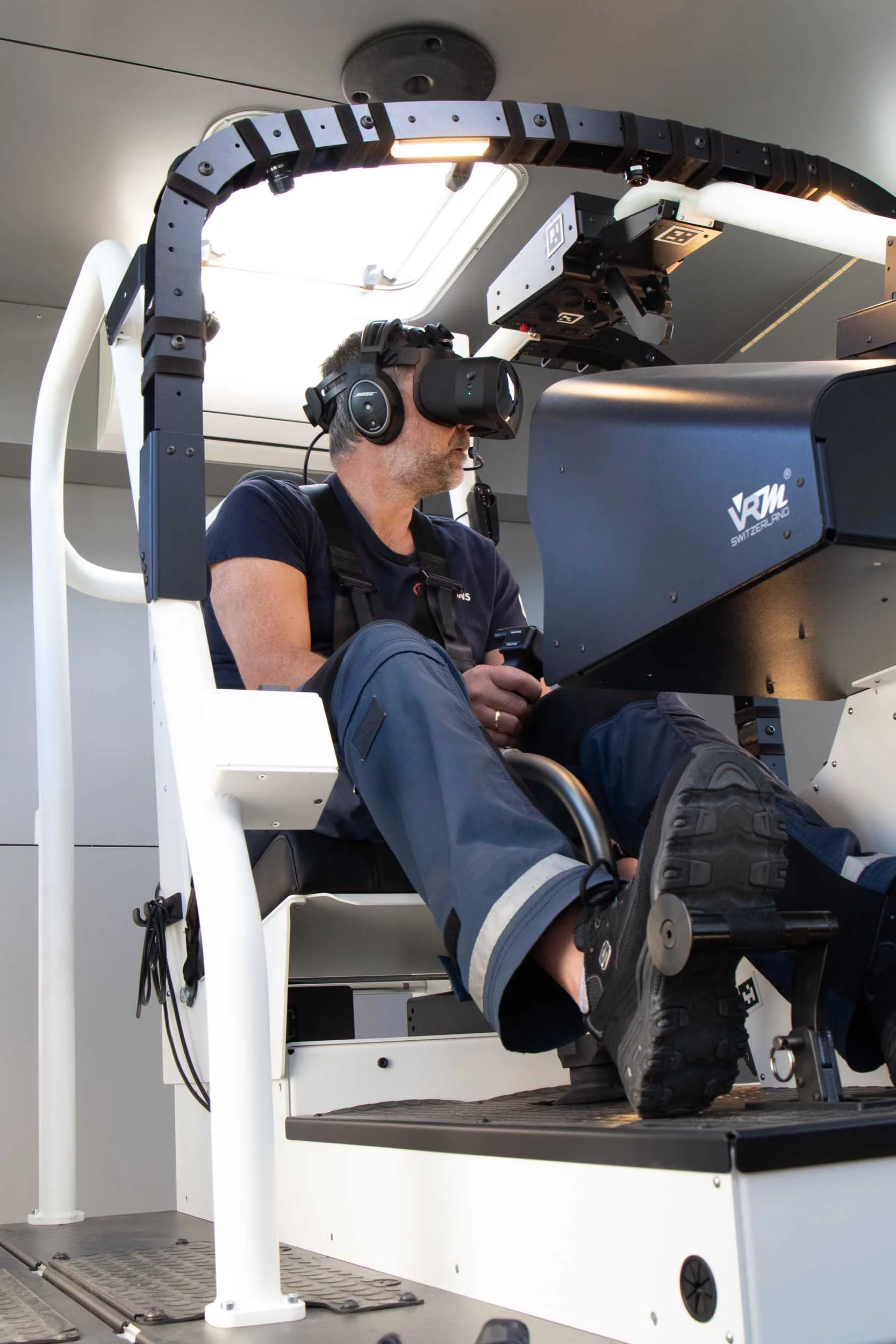
“Loft Dynamics has put an enormous amount of work into creating realistic training programs that are adapted to various types of missions, such as cargo flying using cargo hangers, installation of masts, firefighting and a range of complex manoeuvres. Until now, there have been no simulators that can offer this form of training or realism,” Melhus says.
The simulator gives pilots the ability to repeat difficult scenarios, practice procedures and decision-making, and prepare for conditions they should not have to encounter for the first time in an aircraft.
Bringing H125 simulator training closer to pilots
Helitrans is initially using the simulator for its own pilots and plans to make the training capability available to other operators as well.
“At Helitrans, we are concerned with flight safety not only for our own pilots and machines, but for the entire industry. This simulator moves flight safety in the domestic segment quantum leaps forward, and it is important for us that the entire industry can benefit from this,” says Melhus.
Helitrans has invested in two Airbus H125 simulators. One is installed at the training and simulator center at Gardermoen near Oslo Airport. The other is installed in a mobile facility that can be moved as needed.
That flexibility addresses another constraint in helicopter simulator training: access. Helitrans has previously sent pilots abroad to use conventional simulators. With its own systems, the company can bring aircraft-specific training closer to where its pilots are based. Simulator training also provides a weather-independent environment where pilots can practice and repeat demanding scenarios without waiting for suitable flying conditions or putting an aircraft and crew at unnecessary risk.
The deployment points to a different model for helicopter training. Instead of requiring pilots to travel long distances for aircraft-specific simulation—or relying on an available helicopter and suitable conditions—operators can bring training closer to the pilots and missions it is designed to support.
About Helitrans AS
The Norwegian helicopter company Helitrans AS is a nationwide service provider with a fleet of 24 helicopters and 115 employees, headquartered at Trondheim Airport, Værnes. In addition, the company has bases in Kristiansand, Ljosland, Stavanger, Sauda, Voss, Oslo, Værnes, Mosjøen, Narvik, Tromsø, Alta and Tana. The company also operates in Svalbard and Iceland. Helitrans has the main contract for forest fire extinguishing in Norway with the Directorate for Safety and Emergency Planning, and holds Statnett’s highest certifications for power line construction.